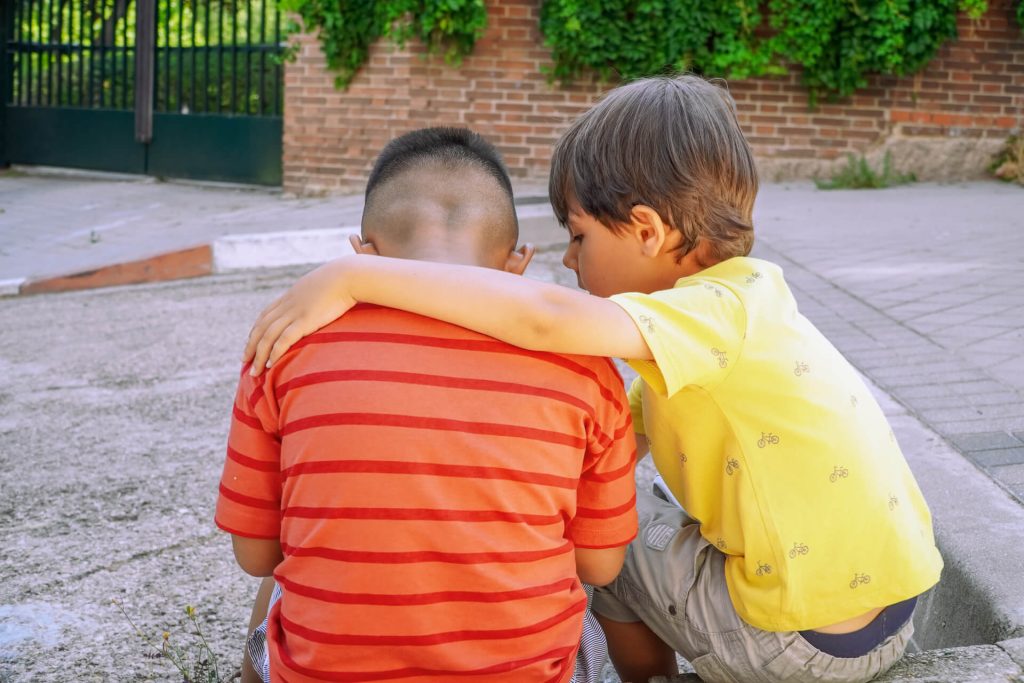


Waiting for his friend was taking ages.
My nine-year-old broke the silence: “Mum, can you tell me a story about when you were little? All the stuff that happened, how you went to school, what you used to play?”
“I can. But will you be bored? I don’t know exactly what you want me to tell you,” I asked, puzzled.
“Just tell me stuff, like nana and grandad do when we go to theirs by the lake. Sometimes the power goes out, we light a candle and then they tell us all sorts of things that happened when they were little. My favourite is the one about when grandad…” He broke off mid-sentence because he’d spotted his friend. As I watched them walk away, it crossed my mind that this day of theirs would one day be an exciting story for some new grandchildren.
The next day we were sitting with friends, talking about the lakes nearby. The usual stuff – where’s nice, where’s nicer, how to get around. Then my husband mentioned Lake Plav, where he grew up. But he didn’t talk about the beauty of the lake, he talked about how his fondest memories are of nana’s stories. Especially the ones about the fairies at the lake. They’d listen to nana before bed. He swears it went on for hours and that it was their favourite part of the day. Now I no longer doubt that nana’s stories are the reason the lake means so much to him and why the magic never left him.
On the third day, as I was making lunch and racking my brain for the best way to organise my time. How to cram all my obligations into as little time as possible. Work, lunch, kids. Some programme was on the telly and I catch myself recognising the words of a little song. “…the fox is after me, come and set me free.” And it all came flooding back. The story of the little goat and nana croaking with her glasses perched on the tip of her nose while I ask her for the hundredth time to tell me the same story. I feel a rush of joy just like back then. Nana used to do the voices of all the characters in the story and it entertained me no end.
Right, this is the third day in a row that I’ve been coming across nanas, grandads and stories? What’s going on?
I tried to remember whether I tell my children stories. I could swear that while I was pregnant I was convinced I’d read to them every night before bed. Carefully chosen literature. And I did. Some of those books surprised me even though I didn’t want to admit it. The language is long forgotten. Barely interesting to me, let alone to them.
Or maybe it was me who wasn’t interesting? I read flatly, without doing the voices, stories that I had chosen. And for exactly as many minutes as I’d slotted into the schedule in advance.
Hmm.
Let me try turning the game on its head (I’m adopting their terms because they tell us stories too, but more on that another time). We’ll tell stories all the time, as we go. That’s how the story came about, and my unfortunate anecdote with dad and a waiter in a restaurant by the sea when I was their age. It got a roar of laughter and a “cringe” from both of them, but it was worth it. A story too is the legend of the handkerchief my mum embroidered for me when I was born. And about the cradle that they slept in, as did all the children in the family. Why I keep the mugs my father sent me in Belgrade when I was a student. How we met, what the day was like when they were born. About the old shopkeeper whose family has kept a shop in the neighbourhood for a whole century, about the flower in the neighbour’s garden that stubbornly refused to wither, about the butterfly that drops by the spoon when we’re making jam. About the five Puftić brothers from my childhood, whom nobody could tell apart. Every family member and historical figure became the main character in a story. And they too became main or supporting characters in adventures.
I’m not saying the stories aren’t a bit sugar-coated. Maybe we’ve prettified a plotline or added some powers and some lines. But we tell them again and again. All the time. Not at a prearranged time. But whenever they feel like it. And they always feel like it.
Children love to listen, but they love even more to tell stories. That’s why we turned reading books into a game. So they can interrupt whenever they like and ask whatever they’re curious about. Sometimes those are questions about the meaning of words I never suspected they didn’t know. Then they learn the word, start using it in the right context and ask for more. Sometimes they ask why a character acted the way they did and wonder what they would do. They ask about and take an interest in the country where the story takes place. Over time those questions become more and more meaningful. Their expression becomes clearer, and so does their confidence. They start demanding stories that are to their taste.
There are many things I’m not sure we’ve done right. Second-guessing and course-correcting is the everyday reality I live with. But when my son tells me I have to watch a series so we can talk about it because he has dilemmas and he’s worked out what could happen in season two, I know that at least something is right.
At the beginning and at the end, we’re left with stories.