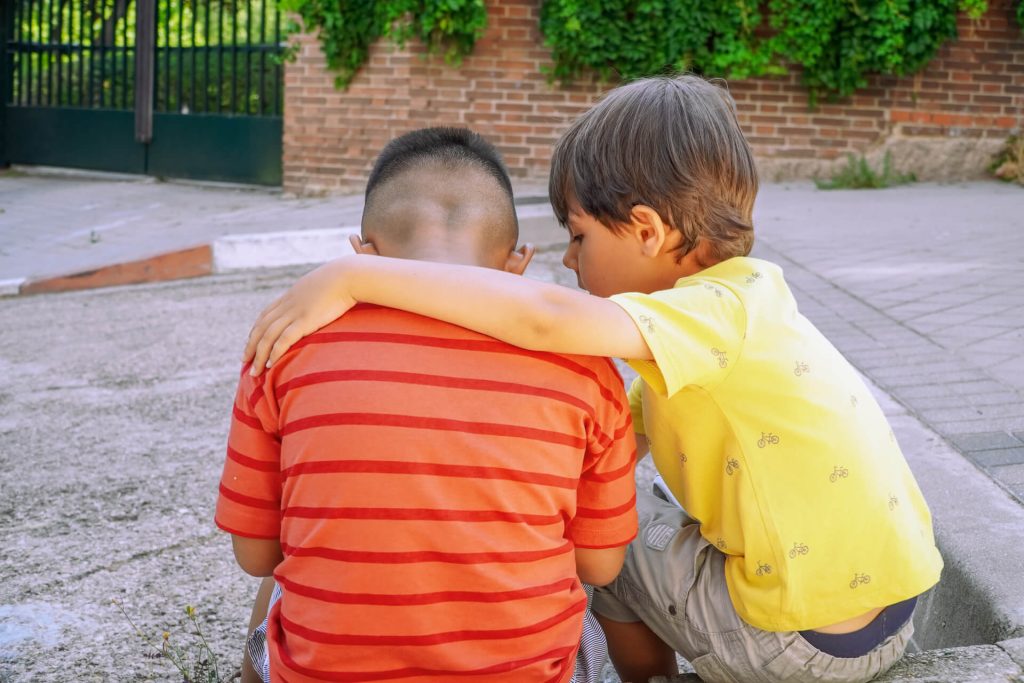


Do you also get the feeling that one of the bigger problems in life is that we think happiness is something that is yet to come? That we are always waiting to get something, achieve something, reach something, so that we can be content? That we will finally be grateful only at some point in the future? That in all that waiting we have neglected the happiness that happens in the present moment, the joy that costs little, almost nothing, and is actually worth the most? Without any intention of being some kind of parenting guru, I would like to share my experience with you through examples of how I taught my children to be modest, grateful and content. Sometimes, as parents, all we need is a small nudge from the outside, and it can change a great deal for the better.
There is nothing worse than people who are “healthy and sound”, lacking nothing, living in a peaceful place, wanting for nothing, surrounded by people they love, and yet constantly dissatisfied, always feeling that something is missing, unable to take joy in what they have.
Of course it is desirable for children to develop critical thinking and to strive to improve the world around them, but a balance needs to be found in all of that – otherwise they will grow into ungrateful and bitter people.
What is gratitude, anyway? How does it develop?
As the lines of the great Montenegrin poet Vitomir Nikolić say:
“A strange desire sometimes seizes me
to buy a postcard and write:
All is well: the post offices are working, there is no war…
And nothing more.”
Gratitude is a fundamental value that shapes our view of the world and the way we live. Teaching children to appreciate life and not to take anything for granted is crucial for their emotional health and happiness. Unfortunately, in the modern world, where so much is easily available but everything also changes extremely quickly, children (and adults too) often forget how important it is to be grateful for what we have.
Gratitude is the conscious recognition and acknowledgement of the good things in our life. It is a state of mind that allows us to focus on the positive aspects of everyday life, instead of on what we lack. Let us teach children that gratitude is more than simply saying “thank you”; it is a deep inner feeling that connects us with the world around us.
A personal example
Children learn by observing, and if they see that you value the small things, they will do the same. As a parent, you are your child’s role model. Show gratitude in your everyday life – pause and marvel at a ladybird, a flower, a sunset, the shapes of clouds, people who are kind to us, music, and indeed all the beauties that surround us.
Although I am someone who protests loudly against injustice and makes no secret of that in front of my children – on the contrary, I teach them to point out for themselves the problems they notice around them, so that things can be better both for them and for others, especially those without privilege, those who are weaker, discriminated against and marginalised – I also love to turn little things into an occasion they will remember. To make everything a proper little spectacle.
When I remind them that they should be happy that at their grandma and grandpa’s they can eat fruit picked straight from the branch. Or when I suggest we play “word chain” during a boring train journey, and then other passengers join in and time passes more quickly for all of us. Or that we have established our little ritual of treating ourselves to chocolate pudding whenever it is a rainy day. Or that I will pompously announce how lucky we are to have brought pretzels and peaches to the beach. Just as I will, for instance, turn a trip to the nearby forest into an adventure, so that we are grateful both that the forest is so close and that we pulled off a proper hiking feat with a picnic during a break in the walk… It all sounds perhaps ordinary, but when you ask the children some time later, those are the things that do not cost much, and they are the things they value and remember.
My children do not forget how I played doctors, hair salon and camping with them. How I set out clues in hidden places for a treasure hunt. They remember how I did not buy them ready-made costumes for fancy dress parties, but we sewed, painted and glued them together.
Giving less importance to material things
Children will know about brands to the extent that you turn those brands into a status symbol, and they will want certain material things if you are the one who gets excited about them. Until they start school, when they will increasingly move among their peers and, unfortunately, learn from them about a leaning towards designer clothes, expensive trainers, mobile phones, PlayStations, children know only what you reveal to them. A child will be content with the sea and a beach where they can play with sand and pebbles. They will not be bored and will not think they need any kind of entertainers or luxury until you show them that.
You cannot explain to children with a definition what it means to be grateful – gratitude manifests itself through everyday actions and feelings. Through simple examples, such as gratitude for a tasty meal, playing with friends, or the fact that we made it possible for the whole family to go for a bike ride and enjoy watching the beauties of nature, children can recognise all that they have in life.
Telling stories about little ones who live in difficult conditions, yet are noble, brave and joyful because of small things, can also help to make your children aware of the privileges they have.
How to avoid discontent and greed?
Why is gratitude important? Gratitude helps to build a positive outlook on the world, reduces stress and increases satisfaction with life.
Parents can help by limiting material gratification and instead encouraging children to seek happiness in experiences, relationships and inner peace. For example, instead of always buying them new toys, spend quality time together – by going out into nature, reading books, or cooking and experimenting together in the kitchen.
Even though we ourselves often lose sight of the importance of everyday blessings, it is our parental duty to guide them and help them build the foundations for a happy, fulfilled and grateful life. Teaching children to appreciate life and to be grateful is a long process, but it is crucial for their future development. Only in that way will they grow into adults who appreciate every day and know how to take joy in life, regardless of the challenges that await them. And when something is not as it should be – instead of moaning, complaining and giving in to despair, we will teach them to approach the problem with a constructive attitude, seeking solutions, fighting and setting things in motion for the better.