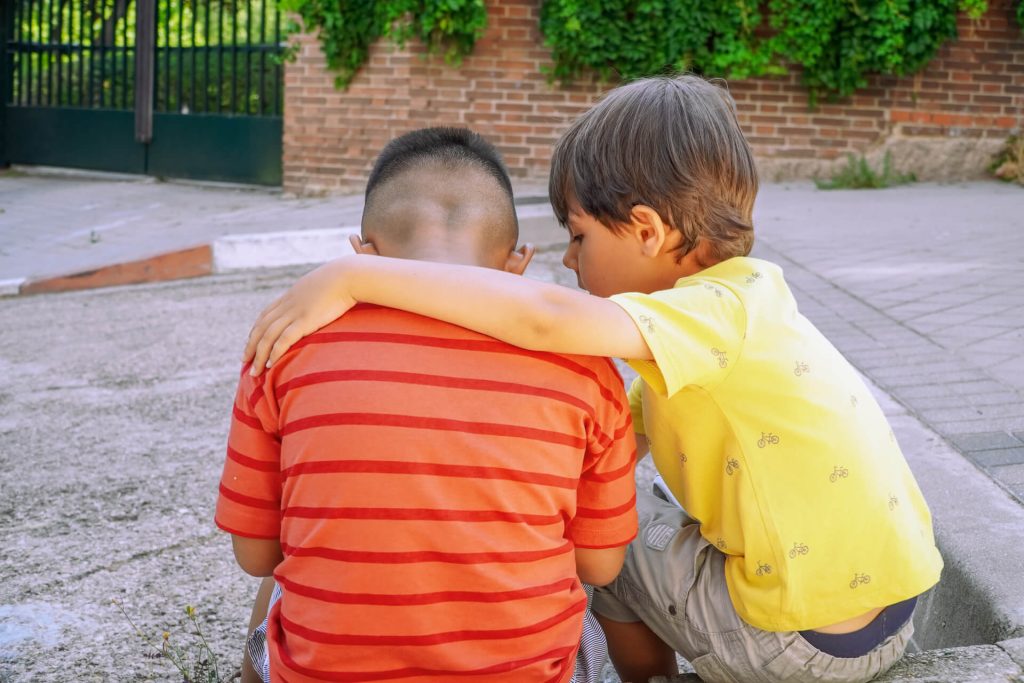


As the mother of a boy who is afraid of the dark and doesn’t like being on his own, I’ve learned that the most important thing is to give a child a sense of security and understanding. I told him stories in which he was the brave hero, and I left a lamp on for him until he fell asleep. And not only that – whenever and for as long as he wanted, he could sleep with us, his parents. These small gestures helped him feel safer and face his fears.
Parents teach their children to be cautious and to be afraid of specific dangers, such as fire or crossing the road. In such cases, a dose of fear can be useful because it helps keep a child safe from harm. However, children can be afraid of situations or objects that adults don’t consider a threat. The sources of fear can change as a child grows. For example, a fear of the dark or of monsters under the bed can give way to fears of burglary or violence.
Support, don’t tease!
Tactics that simply don’t work include teasing a child for being scared or forcing them to face frightening situations. Help your child cope with fear by taking their feelings seriously, encouraging them to talk about their anxieties, explaining the facts to them, and giving them the chance to face their fears at their own pace and with your support.
What can you do to help a child overcome fear?
Some children are afraid of insects, some run in panic from dogs, and many have developed a fear of going to the doctor or the dentist. Some are afraid of being separated from their parents, while others dread a new environment and a new group – in other words, what awaits them at a new nursery, at football training, at their English class, and so on.
1. Talk and understand
The first step in overcoming children’s fears is talking. Talk to your child about their fears and listen without judgement. Try to understand what exactly frightens them and how they feel. This approach helps a child feel understood and less alone in their fears.
2. Gradual exposure
Gradually exposing a child to what they fear can be very effective. For example, if a child is afraid of the dark, you can start by slowly getting them used to a darker room while leaving a lamp or a night light on. As the child begins to feel safer, you can dim the light until they are completely used to the dark.
When it comes to going to the dentist, gradual exposure can involve several steps. The first step might be just a visit to the dentist’s surgery, where the child sees the room and meets the dentist. Next time, the dentist can take the child for a ride up and down in the chair, or just take a peek at their teeth with a little mirror, with no treatment at all. This approach allows the child to get used to the new situation gradually and reduces their fear. Reward your child with a small treat (e.g. a figurine, a sticker) for bravely getting through the check-up.
If your child is afraid of dogs, you can gradually introduce them to a gentle, good-natured dog from the neighbourhood. Start by watching the dog from a safe distance, and then, when the child feels ready, let them stroke the dog in your presence. That way, the child will learn that there’s no reason to be afraid of this noble animal. Teach them that in future they should always ask the owner whether they may stroke the dog, so that nothing unpredictable happens, and advise them not to approach the dog suddenly, but slowly from the front so the dog can get a good look at them. Because dogs have their own fears too:)
3. Stories and play
Stories and play can be powerful tools for overcoming fears. Just as I told my son stories in which he was the brave hero, you can use a similar approach with fairy tales and stories starring your child.
Through play, children can explore their fears in a safe environment. For example, if a child is afraid of insects, you can draw them together or read books about insects so that they get to know them better.
4. Preparing for unpleasant situations
Some children are afraid of going to the doctor. Preparing for these situations can reduce fear. Explain to your child what they can expect during the visit and why it’s important to go to the doctor. You can play “doctors” at home so that the child has a chance to get to know the instruments and procedures in a relaxed environment.
5. Encouraging independence
Encouraging independence in children can help them overcome the fear of being separated from their parents or of a new environment. Gradually leave your child with other family members or friends for short periods. Praise and support them every time they show bravery and independence.
6. A favourite teddy “guards against fear”
Some children feel safer with certain objects, such as a favourite toy or blanket. These props can provide comfort and help a child feel braver in situations that frighten them. If a child is afraid of the dark, like my son, a night light or a favourite toy (a soft toy called Toothy) helps a great deal in making them feel safer.
When should you seek professional help?
Sometimes a child’s fear is so intense or long-lasting that it can interfere with their everyday life and development. In such cases, it may be necessary to seek professional help.
- Phobias: An intense fear of specific situations or objects, such as heights, dogs or water, that lasts longer than six months and seriously interferes with a child’s everyday activities.
- Excessive anxiety: When a child constantly worries about various things and those worries are out of proportion to the situation. This can include fears related to school, health, the family’s safety and other aspects of life.
- Obsessive-compulsive disorder (OCD): If a child has obsessive thoughts or compulsive actions that are excessive and interfere with everyday activities, such as constantly washing their hands, repeatedly checking things they’ve done, and so on. If you notice that your child, for example, counts objects because otherwise “something bad will happen”, that’s OCD.
- Social anxiety: An intense fear of social situations, which can include avoiding school, social events or interaction with peers.
- Panic attacks: Repeated, unexpected attacks of intense fear or discomfort, which can include symptoms such as a racing pulse, sweating, trembling and a feeling of losing control.
If you notice any of these symptoms in your child, it’s important to consult a paediatrician, a child psychologist or another mental health professional. Timely intervention can help a child overcome their fears and anxieties, allowing them to develop in a healthy and happy way.
Conclusion
It’s important to remember that every fear, however irrational it may be at heart, is real and serious to a child. Our role as parents is to support our children, to understand them and to give them the tools to overcome those fears.
Through stories, play, gradual exposure to what the child is afraid of, and with plenty of love, we can help our children grow into brave and independent people. My experience with my son, who is now much braver thanks to our efforts together, shows just how important and effective these strategies are.