

An unpopular opinion, but – The Little Match Girl is one of the most important stories we covered in primary school. I still remember the shock and disbelief in the classroom. I also remember that some of my friends cried. I’ve forgotten the plot, but not the feeling of worry for the girl. That pit in your stomach, the pain, the sadness, the disbelief. But it’s easy to imagine how the little match girl feels because the situation is so extreme. That’s how it has to be with children; fairy tales are always black and white, and we analyse them superficially to teach children about the battle between good and evil.
If we were to dig a little deeper and analyse the characters from fairy tales, hmm, we could find all sorts of fascinating things. Yes, the wolf is bad, and we cheer for Little Red Riding Hood. The wolf is bad because we’ve been told he’s bad. And yet all he does is wander through the forest, his own space, which Little Red Riding Hood barges into because she doesn’t listen to her elders.
I used the word empathy far too carelessly. Especially when I thought that feeling compassion and being empathetic were the same thing. “I’m such an empathetic person, I felt so sorry for the little match girl, I’d think about it for days.” Compassion is a wonderful and useful thing, but it isn’t empathy. And somehow it’s easy to feel sadness and a wish to help someone who is in an unambiguously, clearly difficult situation like our little match girl. But that isn’t empathy.
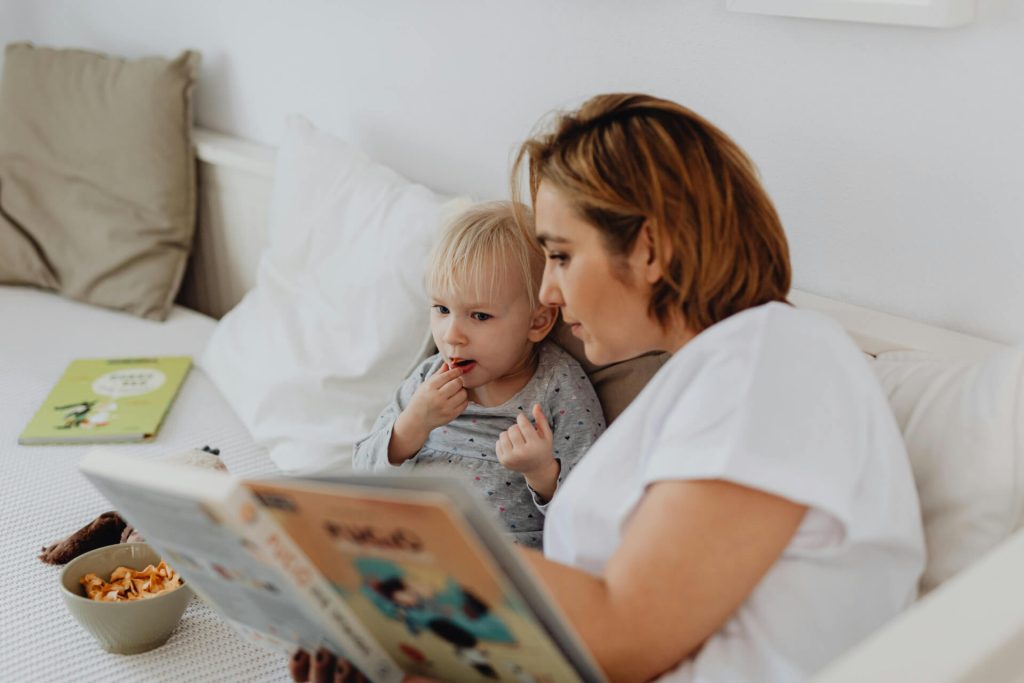
When I had children, I chanted over their heads like the good fairies in Sleeping Beauty, all the things I wanted them to be. That you’ll be good and happy and beautiful and curious and well brought up and that you’ll help others and that you’ll be – empathetic. But how do I teach a child something that even I don’t know whether I can do?
Intuitively I knew that empathy was a beautiful word and that it was good to be empathetic. It just seemed to me like some complex skill or a gift you’re born with. Empathy is knowing how to understand another person. English has a good expression: “to walk in someone else’s shoes”. Once I actually tried it – I put on my grandad’s shoes out of curiosity. And it was strange. They were enormous, they gave me strength, but also responsibility.
It seemed to me that in such enormous shoes, the nicest and biggest in the family, I had a special responsibility and I had to keep an eye on everything that was going on, and everyone would now come to ask me things. I quickly put my own shoes back on; my worn-out trainers were incomparably better for my activities. When I came back in “from outside” – as we called playing around the house back then – I saw my grandad sitting on the bench. The day before, I’d still have been annoyed at him for grumbling quietly because we weren’t all gathered at home. Then I just hugged him and thanked him for worrying about all of us.
All those wishes I whispered over my children’s heads, and all the clear plans for how I was going to raise proper little angels, sank without trace very quickly. Exhausted from the seventh night of no sleep, in a half-delirium, I asked myself what I was doing wrong and why they wouldn’t sleep, what was the matter. And I no longer remember who it was, but someone gave me the best explanation. They said: “Imagine you’re a baby. Or a fresher who’s just arrived on campus. And everyone’s happy to see you for a bit, but when the real party starts and everyone begins to have fun, they tell you – off you go now, into the other room to sleep. Well, you’d cry too.” Since then I’ve tried to apply this rule whenever I can.
When we negotiate about homework, I tell them that I understand they’d rather be doing anything else; when they go to bed reluctantly, I say that I understand they’re worried they’ll miss something; I understand that one of them doesn’t like being in the room when guests arrive because he feels like he’s on stage and has forgotten his lines. We practise together, we learn every day. In the shop, if the shop assistant has been taciturn and grumpy, we say that maybe he’s having a bad day and that he isn’t there to entertain us. Friends who have different habits and characters. We practise never saying that they’re weird, or making them play more basketball, or sing and dance less. They know how to recognise when we’re tired and that a game of rummy will have to wait for a better day.
And then I remembered a conversation with my dad. We were at the seaside, going into the water after I’d been laughing at a girl because she could barely speak our language, having come from abroad. Plus she had a strange swimming costume, something I would never have worn, nor would any of my friends. Dad suddenly called me to come into the water. Only he wasn’t laughing like he usually did. He was disappointed. We watched the waves breaking against our knees. “When you do anything to someone else, first ask yourself how you’d feel if you were in their place. Stop for two minutes, that’s all I’m asking. How would you feel if…”
There you have it – that’s what empathy actually is. How would you feel in someone else’s place. And it can be practised. And it’s so lovely when we have it.